The world's great stories include frightening moments. Here are gentle, practical ways to share them with children aged 5–10.
Noah’s flood. The battles of the Iliad. Rama leaving home for fourteen years. The oldest stories people tell are full of danger, loss and hard choices. That’s part of why they’ve lasted: they help us think about difficult things from a safe distance.
But a five-year-old isn’t a scholar. Here’s how we handle hard moments in Storyloka, and how you can talk about them at home.
Start with the picture, not the plot
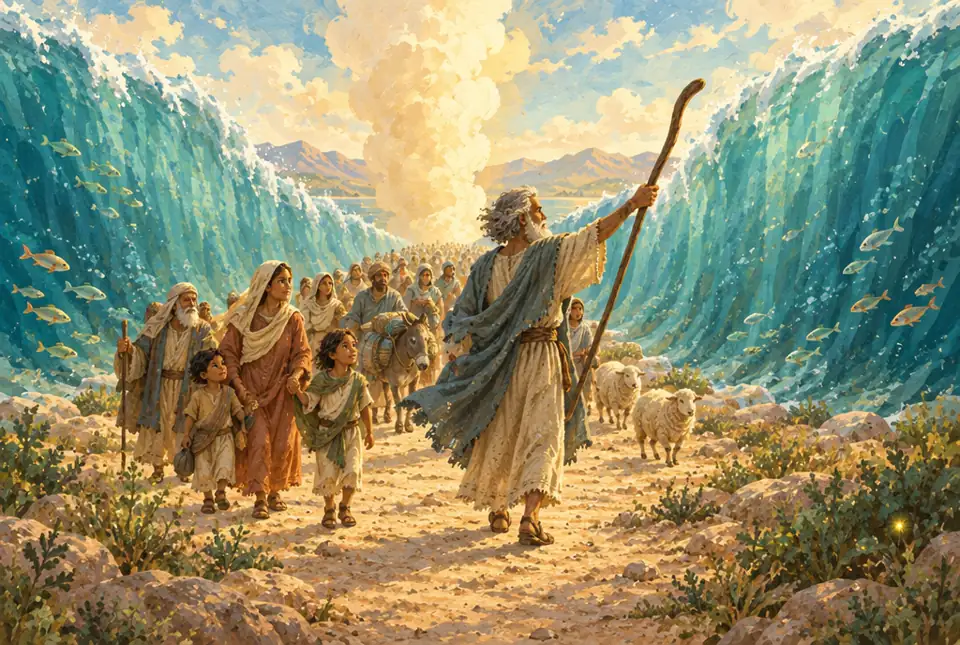
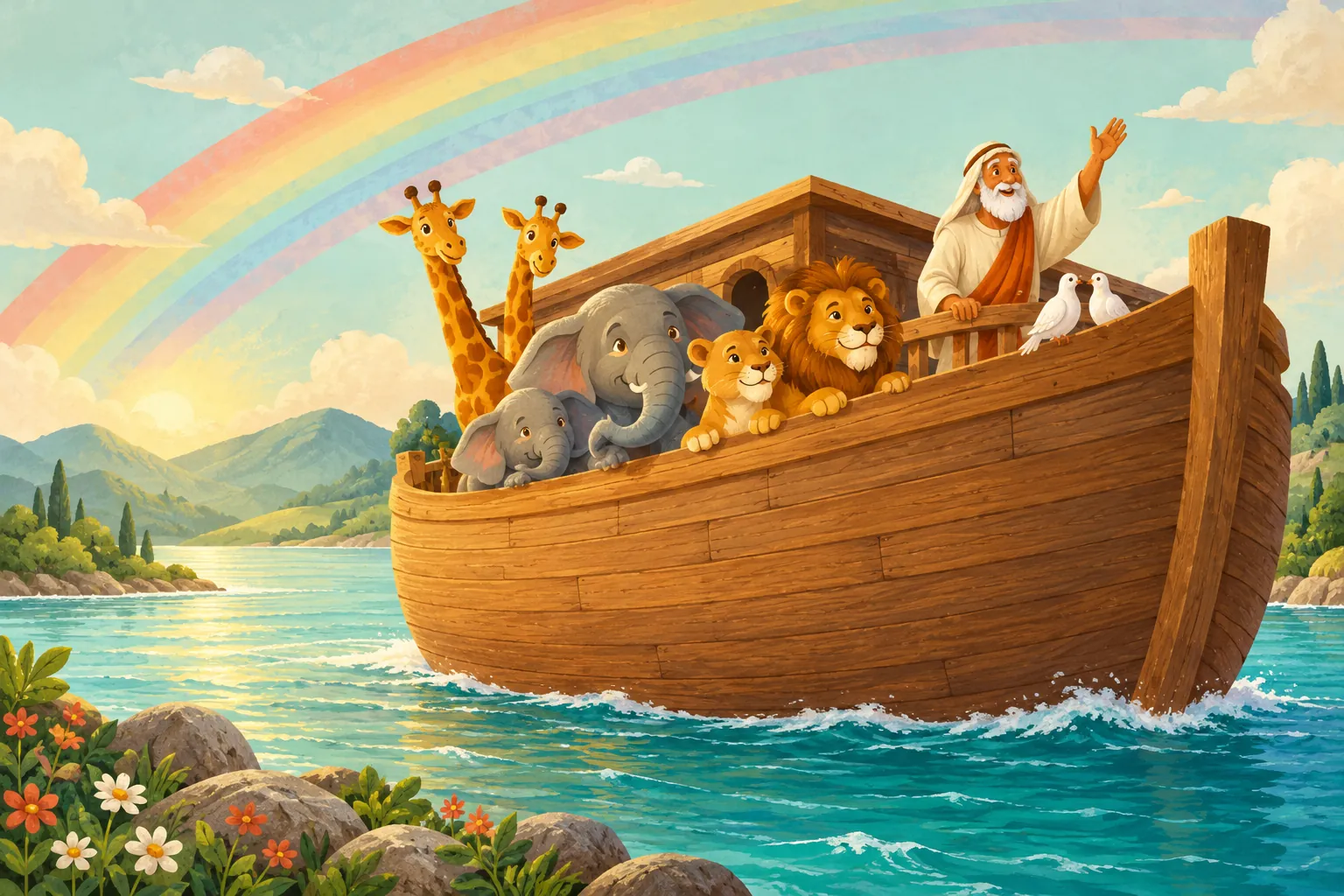
Our paintings show the moment after the danger, or the hope inside it: the ark on calm water under a rainbow, families walking safely between walls of water. Looking at a calm picture first gives children a safe place to stand before the story gets stormy.
Follow your child’s lead
You don’t have to explain everything. Answer the question your child actually asked, simply and honestly, then wait. If they want more, they’ll ask. If they move on, let them.
- “Why did the water come?” may just need: “The story says the world needed a fresh start.”
- “Did the animals get scared?” might need: “Maybe a little. But they were all together, and they were safe in the ark.”
Name the feeling
Hard stories are full of feelings: fear, sadness, missing someone. Naming them helps children understand their own.
- “How do you think Noah felt when the rain started?”
- “Have you ever had to say goodbye to someone?”
Look for the helpers and the hope
Almost every hard story has someone who is brave, kind or faithful in the middle of it. Point them out. Children find comfort in knowing that even in a scary story, someone was looking after others.
It’s fine to say “I don’t know”
Some questions don’t have easy answers, and children can tell when we’re pretending. “That’s a big question. What do you think?” is an honest answer, and it often leads to the best conversations.
How Storyloka helps
- Family lessons are written for ages 5–10. Hard events are told calmly, without graphic detail.
- Nothing in our paintings is frightening: no gore, nothing that looks like blood, no weapons in use.
- The full historical texts keep their original language and mature themes. They sit behind a simple grown-up check, so you decide when your child is ready.
Trust yourself
You know your child better than any app does. If a story feels like too much tonight, choose another one. The stories will still be there when your child is ready for them.